
























GYNECOLOGY
quantusFLM assesses fetal lung maturity by ultrasound
The first 100% non-invasive test that offers an alternative to invasive techniques for assessing whether the baby’s lungs are ready to breathe at birth.

DESCRIPTION
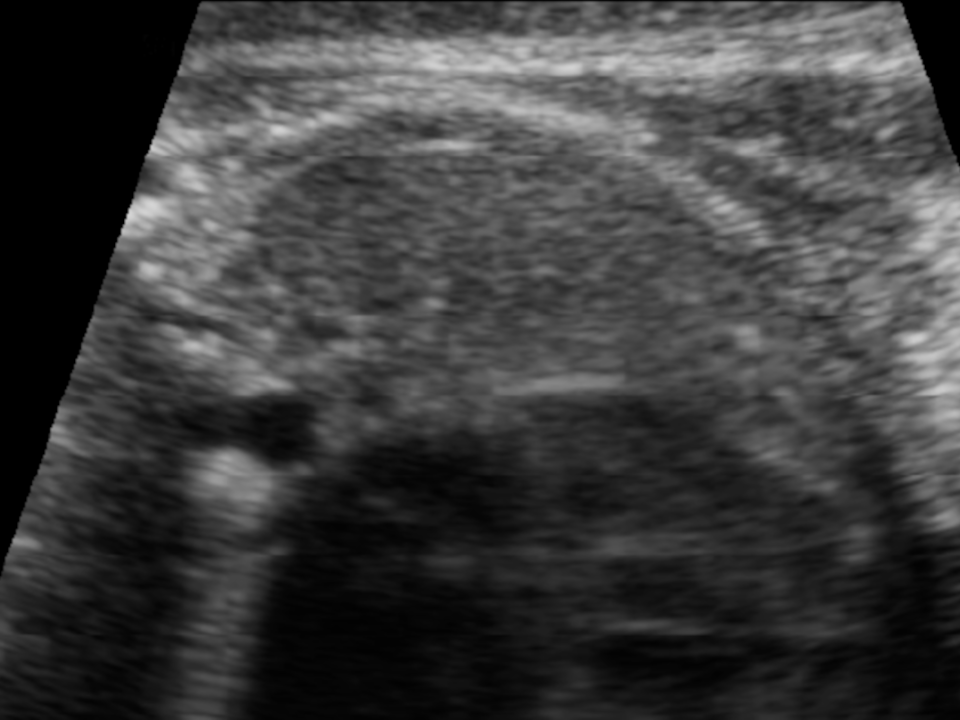
quantusFLM is a Fetal Lung Maturity test based on the automatic analysis of an ultrasound image.
It is a software medical device (MDSW) designed for use by gynecologists and obstetricians to provide a prediction (expressed as a risk percentage) of neonatal respiratory morbidity (NRM), including respiratory distress syndrome (RDS). The device provides medical information to support decision-making in the management of pregnancies at risk of NRM.
The device is designed as a diagnostic support tool; its results help the medical professional in decision-making.
USE CASES

CU-FLM-01: Alternative information to the use of amniocentesis
In pregnant women at risk of preterm birth where fetal lung maturity needs to be assessed, quantusFLM allows non-invasive estimation of the risk of neonatal respiratory morbidity through the analysis of lung ultrasound images, providing additional information that can help the specialist assess the need to perform an amniocentesis and avoid invasive procedures when they are not necessary.
CU-FLM-02: Additional information for corticosteroid prescription
In pregnant women at risk of preterm birth between 34 and 36 weeks of gestation, quantusFLM provides a non-invasive estimate of fetal lung maturity that can complement the specialist’s clinical assessment and provide additional information for deciding whether corticosteroid administration is indicated, especially in cases where there is uncertainty about the risk of neonatal respiratory morbidity.
CU-FLM-03: Support for planning elective delivery in high-risk pregnancies
In pregnant women with an indication for elective delivery (e.g. preeclampsia, gestational diabetes, fetal growth restriction), quantusFLM allows non-invasive estimation of the risk of neonatal respiratory morbidity, providing additional data that helps the specialist decide the optimal timing of delivery.

CLINICAL EVIDENCE
Tool for the non-invasive prediction of neonatal respiratory morbidity based on a fully automated fetal lung ultrasound analysis (quantusFLM).
In the initial versions (v < 3.0) of the medical device, full automation was not possible due to the need for manual delineation of the fetal proximal lung by clinical staff. This limitation is resolved in the final versions (v ≥ 3.0), which incorporate an automatic delineation model into the device.
The development and validation of the tool consisted of the following steps:
The validation results for model 3.0 are:
| SENS ** | SPEC ** | PPV ** | NPV ** | |
|---|---|---|---|---|
| quantusFLM | 71.0% | 94.7% | 67.9% | 95.4% |
| GA * | 88.8% | 73.5% | 34.4% | 97.7% |
* GA: Gestational age
** SENS and SPEC (sensitivity and specificity)
PPV and NPV (Positive Predictive Value and Negative Predictive Value)

CLINICAL VALIDATION
Validation through a multicenter study using model 2.0
The aim of the study was to evaluate the performance of quantitative ultrasound texture analysis of the fetal lung (quantusFLM) in predicting neonatal respiratory morbidity in preterm and early-term births (<39.0 weeks) in a prospective multicenter study conducted at 20 centers worldwide.
The validation was carried out on the initial version of the device, in which the fetal lung was delineated manually by a clinician; however, it is extrapolable to the current version, since the risk classification model remains the same across versions.
Fetal lung ultrasound images were obtained between 25.0 and 38.6 weeks of gestation, within 48 hours after delivery, stored in DICOM (Digital Imaging and Communication in Medicine) format, and analyzed with quantusFLM.
The validation results, compared with the results of various invasive NRM prediction tests, were:
| SENS ** | SPEC ** | PPV ** | NPV ** | |
|---|---|---|---|---|
| L/S Ratio * | 74.6% | 82.5% | 34.1% | 96.4% |
| PG * | 82.7% | 54.4% | 18.0% | 96.3% |
| Lamelar body * | 82.4% | 74.4% | 27.9% | 97.6% |
| TDxII * | 88.5% | 77.7% | 28.5% | 98.5% |
| quantusFLM | 74.3% | 88.6% | 51.0% | 95.5% |
* L/S: Lecithin / Sphingomyelin ratio
PG: Phosphatidol Glycerol
TDxII: Surfactant/albumin ratio
** SENS and SPEC (sensitivity and specificity)
PPV and NPV (Positive Predictive Value and Negative Predictive Value)
CLINICAL EVIDENCE (PHASE I)
Evaluation of an improved tool for the non-invasive prediction of neonatal respiratory morbidity based on a fully automated fetal lung ultrasound analysis (quantusFLM)
More than 13,000 non-clinical images and 900 fetal lung images (manually delineated by 2 clinical team members to outline the lung proximal to the fetal transducer) were used to develop a computerized method based on texture analysis and machine learning algorithms, trained to predict the risk of neonatal respiratory morbidity in fetal lung ultrasound images.
The method, called “quantitative ultrasound analysis of fetal lung maturity” (quantusFLM), was subsequently validated blindly in 144 neonates born between 28+0 and 39+0 weeks of gestation. Lung ultrasound images in DICOM format were obtained within 48 hours after delivery, and the software’s ability to predict neonatal respiratory morbidity, defined as respiratory distress syndrome or transient tachypnea of the newborn, was determined.
The results, stratified by gestational age subgroup, were:
| GA * | SENS ** | SPEC ** | PPV ** | NPV ** |
|---|---|---|---|---|
| 28+0 – 39+0 | 86.2% | 87.0% | 62.5% | 96.2% |
| 28+0 – 33+6 | 90.5% | 94.1% | 95.0% | 88.9% |
| 34+0 – 39+0 | 75.0% | 85.7% | 30.0% | 97.7% |
* GA: Gestational age
** SENS and SPEC (sensitivity and specificity)
PPV and NPV (Positive Predictive Value and Negative Predictive Value)
CLINICAL VALIDATION (PHASE I)
Validation through a multicenter study of the results of the previous model.
The aim of the study was to evaluate the performance of quantitative ultrasound texture analysis of the fetal lung (quantusFLM) in predicting neonatal respiratory morbidity in preterm and early-term births (<39.0 weeks) in a prospective multicenter study conducted at 20 centers worldwide.
Fetal lung ultrasound images were obtained between 25.0 and 38.6 weeks of gestation, within 48 hours after delivery, stored in DICOM (Digital Imaging and Communication in Medicine) format, and analyzed with quantusFLM.
The validation results, compared with …, were:
| SENS ** | SPEC ** | PPV ** | NPV ** | |
|---|---|---|---|---|
| L/S Ratio * | 74.6% | 82.5% | 34.1% | 96.4% |
| PG * | 82.7% | 54.4% | 18.0% | 96.3% |
| Lamelar body * | 82.4% | 74.4% | 27.9% | 97.6% |
| TDxII * | 88.5% | 77.7% | 28.5% | 98.5% |
| quantusFLM | 74.3% | 88.6% | 51.0% | 95.5% |
* L/S: Lecithin / Sphingomyelin ratio
PG: Phosphatidol Glycerol
TDxII: Surfactant/albumin ratio
** SENS and SPEC (sensitivity and specificity)
PPV and NPV (Positive Predictive Value and Negative Predictive Value)
CLINICAL EVIDENCE AND VALIDATION (PHASE II)
Study for the development and validation of a new version of quantusFLM incorporating fully automated delineation of fetal lungs based on deep learning techniques.
A set of 790 fetal lung ultrasound images obtained between 24+0 and 38+6 weeks of gestation was evaluated. Perinatal outcomes and the occurrence of NRM were recorded. Version 3.0 of quantusFLM was applied to all images to automatically delineate the fetal lung and predict NRM risk. The test was compared with the same technology but using manual delineation of the fetal lung, and with a scenario in which only gestational age was available.
The results obtained were:
| SENS ** | SPEC ** | PPV ** | NPV ** | |
|---|---|---|---|---|
| quantusFLM (automatic ROI) | 71.0% | 94.7% | 67.9% | 95.4% |
| quantusFLM (manual ROI) | 68.2% | 93.7% | 62.9% | 95.0% |
| GA * | 88.8% | 73.5% | 34.4% | 97.7% |
* GA: Gestational age
** SENS and SPEC (sensitivity and specificity)
PPV and NPV (Positive Predictive Value and Negative Predictive Value)

SOLUTION INTEGRATION
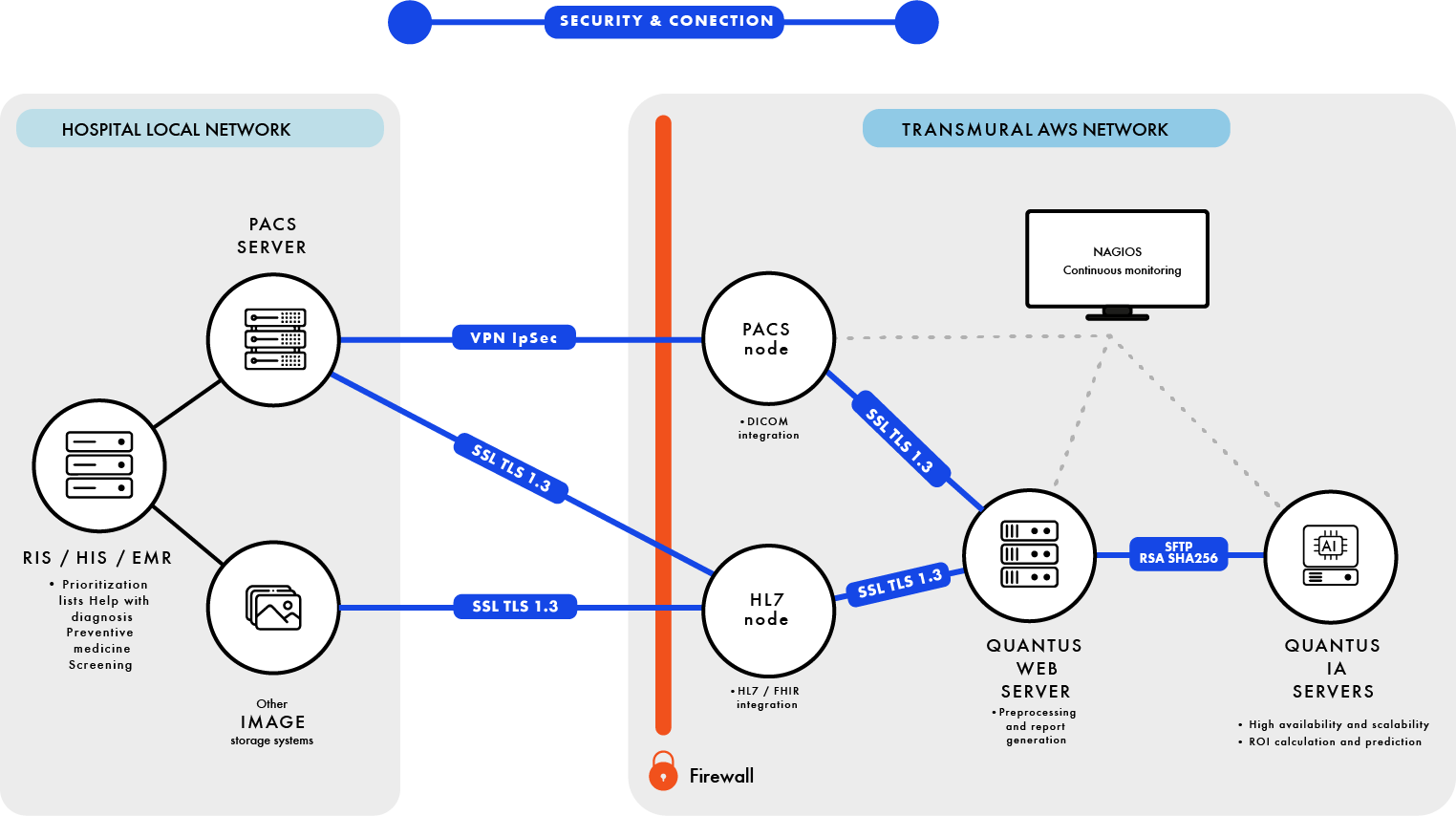
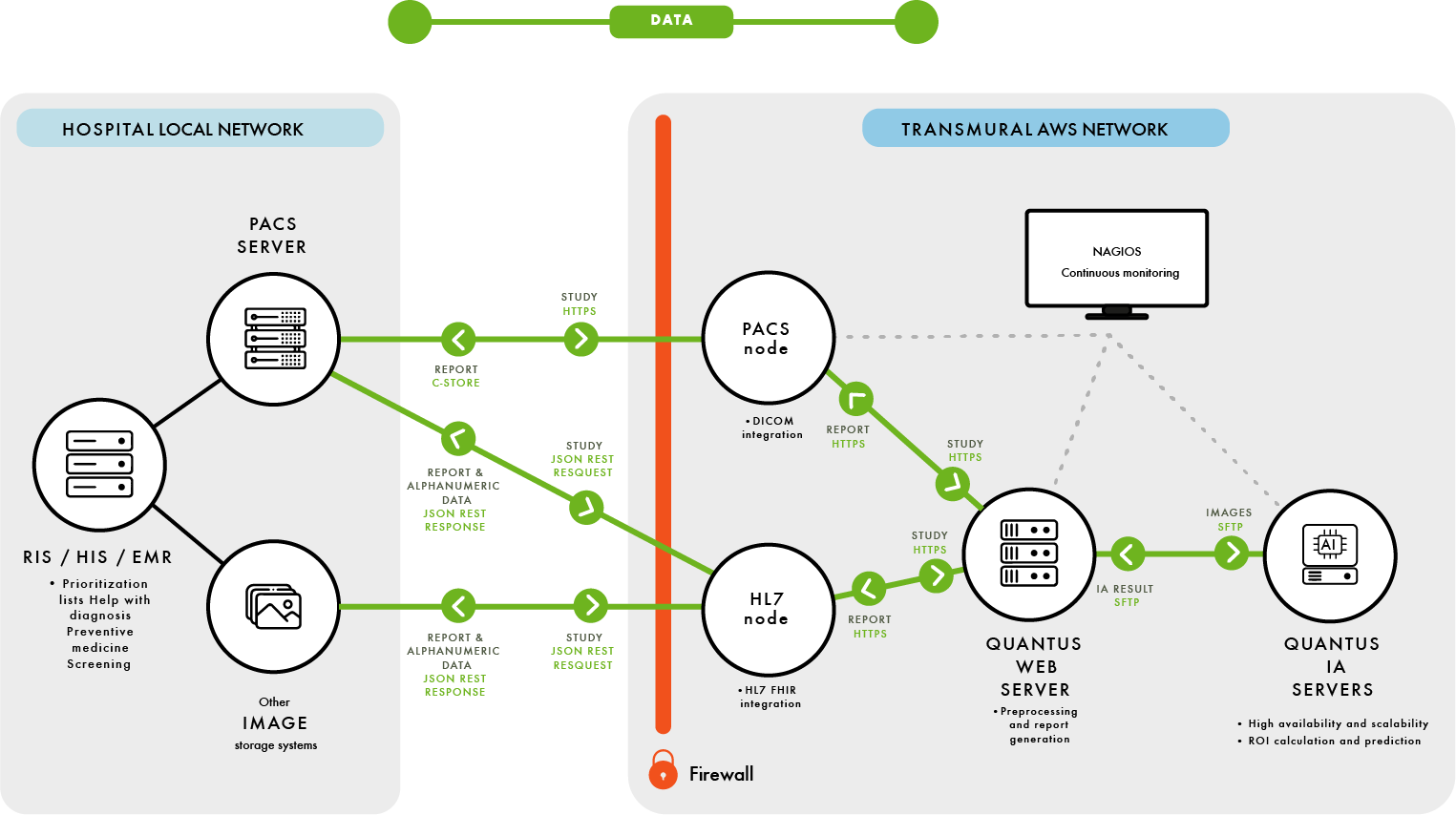
- Our products allow integration with client systems through the DICOM protocol and the HL7 FHIR interface
- We ensure data privacy in SaaS installations by establishing IPsec VPNs with our clients.
- All communications outside the client environment are secured with SSL TLS 1.3

LICENSING BY NUMBER OF TESTS
LICENSING BY ANALYSES PERFORMED
CUSTOM OFFERS


